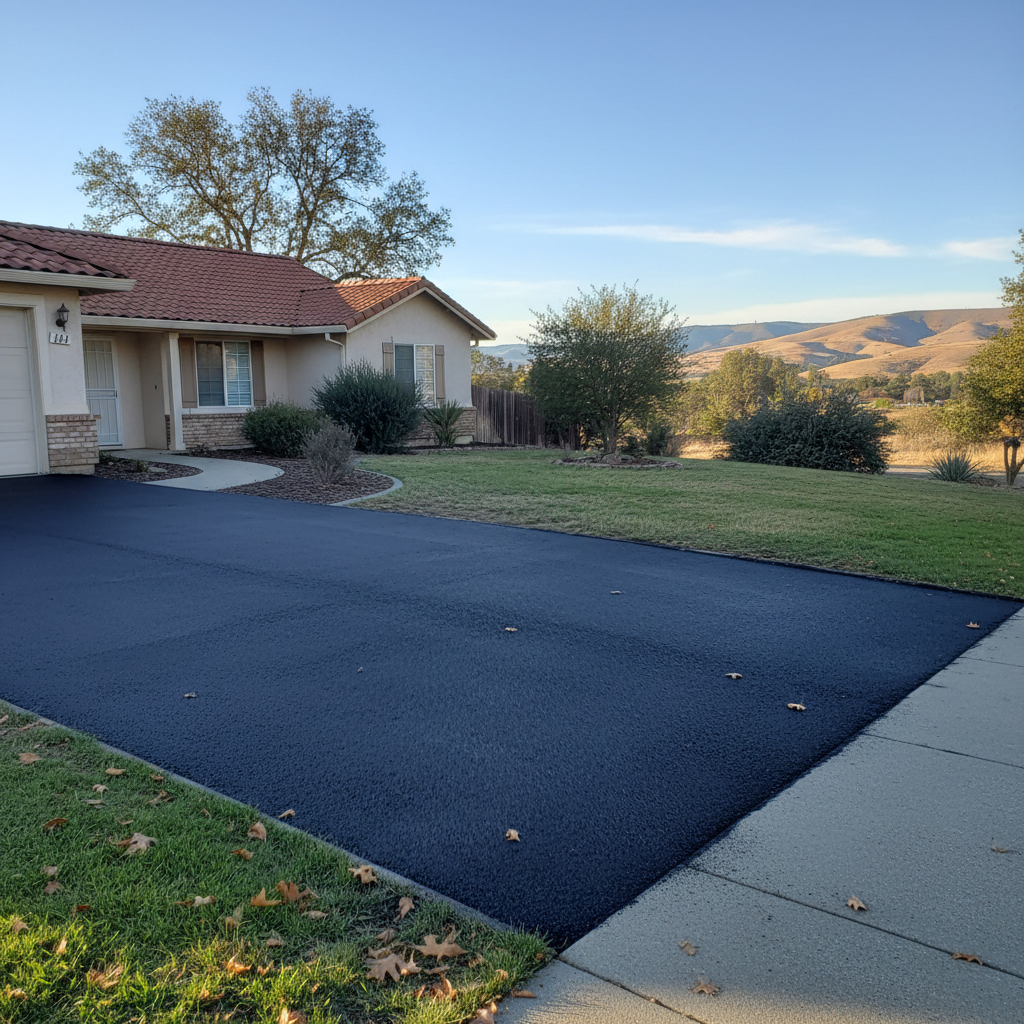
Alright, let's talk about slurry coating. If you've got asphalt here in Redding – maybe it's your driveway, a parking lot, or even a private road – you've probably heard that a slurry seal can really protect it. It's a smart move, honestly, to make your pavement last longer, especially with our crazy summer heat and those freeze-thaw cycles we sometimes get up here. But, you know, what's it actually going to set you back?
As a local contractor, I get asked this all the time. And while some folks might just shrug and say "it depends," I'm actually going to give you some real numbers and insights. That way, you'll know what to expect when you're thinking about getting your asphalt treated.
What Makes a Slurry Coating Cost What It Does?
A whole bunch of things play into the final price tag for a slurry coating job. It's definitely not just a matter of slapping some material down and calling it done. So, here's what we typically look at:
- How Big Is the Area? This is the big one, no surprise. More square footage means we need more material and more people working. Now, while the total cost goes up, the price per square foot often drops for bigger jobs. That's because we can spread out our setup and mobilization costs over a much larger area.
- What Shape Is Your Pavement In? This is huge. If your asphalt is full of big cracks, potholes, or has a lot of damage, it's going to need a lot more prep work before we can even think about putting down the slurry. Think about painting a wall – you wouldn't just paint over peeling paint and holes, right? We've got to fix those problems first. This could mean crack filling, patching, or even some minor repairs to the base layer. The worse the condition, the more prep, and yep, the higher the cost.
- What Kind of Slurry Seal? There are different types of slurry seals out there (like Type I, II, or III), and they vary in how big their aggregate is and how thick they are. Type II is pretty common for neighborhood streets and parking lots, for instance. The specific type we pick really depends on your pavement's condition and how much traffic it's going to see. Some are thicker, some use different kinds of rock, and they all have different price points.
- Labor Rates & How Easy It Is to Get To: Labor costs change, of course. And if your project is tough to reach or needs special equipment, that can definitely bump up the price. For example, a really tight, winding driveway up in the Palo Cedro hills might take more time and specialized gear than a big, wide-open parking lot.
- The Weather: Believe it or not, the weather plays a role. Slurry seal needs just the right conditions to dry and cure properly. Delays because of unexpected rain or extreme heat (and we certainly know all about that here in Redding!) can sometimes add to the project's costs.
- Any Extra Services? If you need things like line striping for a parking lot, or a whole lot of crack filling beyond the usual, those are separate costs. They'll get added on top of the basic slurry coating price.
Typical Slurry Coating Prices in California (and Right Here in Redding)
Okay, let's get down to some actual numbers. Just remember, these are ranges, and your specific quote will definitely depend on all those factors I just mentioned. Slurry sealing prices can swing quite a bit, but I can give you a pretty good idea of what I've seen.
- Residential Driveways: For a typical home driveway, you're generally looking at somewhere around $0.50 to $1.00 per square foot for both labor and materials. Smaller driveways might hit the higher end of that range, or even a little more, because of those minimum project fees that cover getting our crew and equipment to your place. So, a 1,000 square foot driveway could easily run you $500 to $1,000.
- Commercial Parking Lots/Bigger Areas: For larger commercial jobs, the price per square foot usually goes down. You might see ranges from $0.17 to $0.40 per square foot, with a sweet spot often around $0.22 to $0.32 for jobs with normal prep work. This happens because those fixed costs are spread out over a much, much larger area. So, a 10,000 square foot parking lot might be somewhere from $1,700 to $4,000.
These numbers usually cover the basic application of the slurry seal itself. If your pavement needs a lot of crack filling beforehand, plan on paying an extra $1.00 to $3.00 per linear foot for those repairs.
What Should a Good Quote Include?
When you get a quote from Omega Asphalt Solutions, or really any good contractor, it should be super clear about what you're paying for. Here's what you should definitely expect to see:
- Surface Preparation: This is absolutely crucial. It should cover cleaning the surface – getting rid of dirt, debris, and any loose materials, often with power sweeping or blowing. It should also spell out any necessary crack filling or patching that needs to happen before the slurry goes down.
- Materials: The specific type of slurry seal they're going to use (like Type II), and sometimes even the manufacturer, should be listed.
- Application: This covers the actual putting down of the slurry seal, usually in one or two coats depending on the project and how durable you need it to be.
- Traffic Control: For bigger jobs, especially on roads or busy parking lots, this means cones, barricades, and signs to keep everyone safe while we're working.
- Cleanup: What happens to any debris or extra material once the job is finished.
- Warranty: A good contractor will stand behind their work, naturally.
How to Avoid Overpaying for Slurry Coating
Nobody wants to just throw money away, especially on something as important as your property's infrastructure. Here's my best advice:
- Get Multiple Quotes: Don't just go with the first person you talk to. Get at least three detailed quotes from different, reputable contractors. This helps you compare prices and really understand what each job entails.
- Understand What's Covered: Make sure each quote is for the exact same amount of work. One contractor might include extensive crack filling, while another might only do minimal prep. Ask questions! If a quote looks way cheaper, find out why. They might be cutting corners on materials or prep, you know?
- Check References and Reviews: Always, always check a contractor's reputation. Look for local reviews and ask for references. A good track record speaks volumes, it really does.
- Don't Skimp on Prep Work: This is where people often try to save money, and it almost always comes back to bite them later. Proper surface preparation is the foundation of a long-lasting slurry seal. If it's not done right, the slurry won't stick, and you'll be doing it all over again sooner than you think.
- Ask About Materials: Not all slurry materials are created equal. Ask what kind of sealer they're using and if it's right for our Redding climate. A quality product makes a real difference.
- Be Wary of "Too Good to Be True" Prices: If one bid is drastically lower than all the others, there's usually a reason. It could be inferior materials, inexperienced labor, or steps skipped in the process. You'll probably end up paying more in the long run to fix a shoddy job.
Slurry coating is a great investment for your asphalt, protecting it from the elements and making it last longer. By understanding these cost factors and knowing what to look for in a quote, you'll be well-equipped to make a smart decision for your Redding property.